
 By
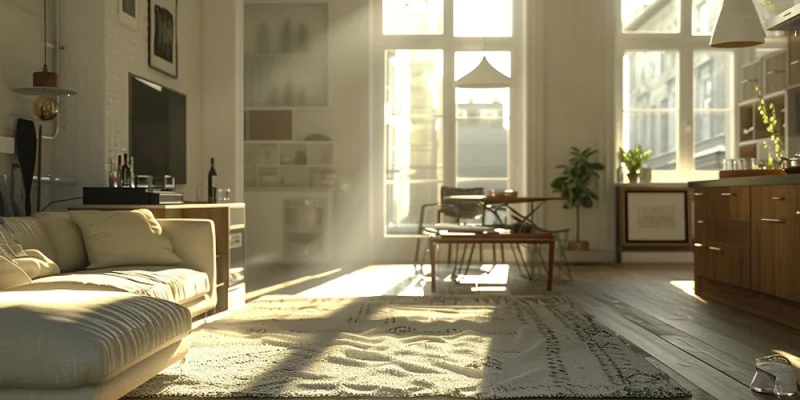
A family in a Normanton Park condo once had their new furniture tested after months of unexplained headaches. Some pieces came back at nearly sixty times Singapore’s indoor air standard for formaldehyde. They removed every piece of pressed-wood furniture from the unit. That’s an extreme case, but the gas behind it is sitting in far more homes than most people realise, quietly releasing itself from brand-new cabinets, flooring and countertops long after the smell itself seems to have faded.
Where That New Smell Is Actually Coming From
The distinctive sharp smell in a freshly furnished or newly renovated home usually isn’t the wood itself. It’s formaldehyde, a gas used in the adhesives that hold pressed-wood products together. Plywood, particleboard and MDF all rely on it, which puts it inside a huge share of cabinets, wardrobes and shelving. Laminate flooring, vinyl flooring, wallpaper adhesive and some engineered hardwood carry it too, and all of these release the most gas in the first few months after installation.
What It Can Actually Do to the People Living With It
At lower, everyday exposure, it tends to show up as eye, nose and throat irritation, coughing, headaches or dizziness, and it can trigger allergic reactions or asthma flare-ups in people who are already sensitive. A thorough formaldehyde cleaning visit exists precisely because these symptoms are so easy to blame on something else first, a cold, dry air, stress, rather than the cabinet two feet away. The International Agency for Research on Cancer classifies formaldehyde as carcinogenic to humans, and long-term exposure has been linked to nasopharyngeal cancer and leukaemia, along with chronic respiratory problems from repeated low-level contact.
Why It Doesn’t Just Fade Away Like Other Smells
Singapore’s SS 554 standard caps formaldehyde at 0.08 parts per million in air-conditioned indoor spaces. A Hougang home once measured 0.72 ppm, nearly nine times that limit, and residents there fell ill repeatedly before the source was identified. Unlike paint fumes or new-carpet smell, which thin out within weeks, formaldehyde emissions decay on a much longer curve. Some pressed-wood materials can keep releasing detectable amounts for years, with estimates for complete breakdown running well over a decade in certain products.
What a Professional Formaldehyde Treatment Actually Involves
A proper formaldehyde treatment starts with an on-site air quality assessment to identify which surfaces are actually emitting the gas, rather than treating the whole home as one uniform problem. Electronics and valuables are usually covered before the next stage, and furniture with heavy pressed-wood content may be opened up or temporarily moved.
The treatment stage itself can include air purification, chemical misting that breaks down the formaldehyde molecule, sealing or coating the surfaces that are still releasing gas, and in some cases a photocatalyst coating that keeps working after the visit ends. A re-test typically follows about a week later, and the space is considered cleared once readings settle back under the SS 554 threshold.
Self-Help Steps Versus What a Professional Actually Does
| Approach | What it does | Where it falls short |
| Ventilation and fans | Lowers concentration while windows are open | Levels climb again once the home is sealed up |
| Activated carbon air purifiers | Captures some airborne formaldehyde | Filters saturate and need regular replacement |
| DIY gels or charcoal bags | Marketed as passive absorbers | Users commonly report little measurable effect |
| Professional treatment | Tests, treats and verifies the emitting surfaces directly | Costs more and isn’t a one-time fix if new items arrive |
Why One Treatment Might Not Be the Last
A single treatment clears what’s emitting on the day the technician visits. It doesn’t make the home immune to formaldehyde showing up again from a completely different source a year or two down the line, which catches a lot of homeowners off guard after paying for a thorough first visit and assuming the issue is permanently settled.
- New furniture, flooring or built-ins brought in after the first treatment can reintroduce formaldehyde on their own schedule.
- A neighbour’s renovation in a shared ventilation system can occasionally raise levels in an already-treated unit.
- Humidity and heat both increase how much gas a material releases, so levels can shift with the seasons.
- A follow-up reading every year or two catches a rebound before symptoms do.
None of that makes the first treatment pointless. It just means the air quality in a renovated or newly furnished home is closer to something that gets monitored over time than a problem that’s solved once and forgotten.
A smell that lingers well past the first few weeks of new furniture or renovation is worth taking seriously rather than waiting it out. Contact Doctor Clean to have the air tested and find out what’s actually still emitting it.






Comments