
 By
By 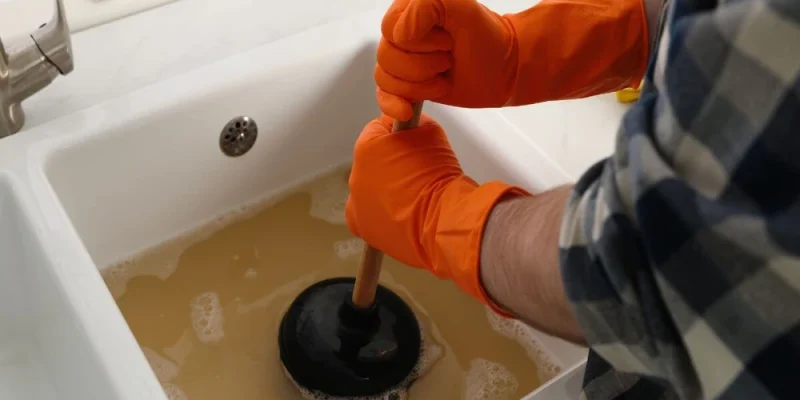
Pour a pot of pasta water into a kitchen sink in Kettering and it begins a trip most people never think about. It drops through a curved trap, slides into a vertical stack, crosses the basement, and leaves the house through a pipe that was probably laid while Kennedy was in office. The median Kettering home was built in 1961, so the line carrying that water to the street has been working for more than sixty years, very often without anyone ever looking inside it.
That age matters more than most homeowners realize. Builders around Dayton in that era typically used cast iron inside the house and either vitrified clay tile or a fiber pipe soaked in coal tar pitch, known as Orangeburg, for the run under the yard. Clay went in as short sections, and every joint between them is a possible doorway for roots. Orangeburg was never really expected to last much beyond fifty years, and with age it softens, blisters, and slowly flattens into an oval. Knowing which of these sits under your lawn shapes nearly every maintenance decision that follows.
Before tracing that water stop by stop, it helps to know who picks up the phone when the trip goes wrong. For families across Dayton, Kettering, and the wider Miami Valley, that call often goes to Dayton Sewer and Drain, a locally owned outfit whose team brings over fifty years of combined drain and sewer experience to every job. They are licensed, bonded, and insured, they answer around the clock, and they put a written price in your hands before any work begins, with the estimate itself free. Their work covers every point on the route below: kitchen, bathroom, and washer drains, sewer cleaning, clearing a clogged main, full sewer line repair and replacement, and toilet repair and installation.
First Stop, the Trap Beneath the Sink
The kitchen trap is where the journey usually stumbles first. Grease leaves the pan as a liquid and cools into a paste within a few feet of pipe. Over time, fats also react with calcium in hard water and form waxy, soaplike deposits that cling to pipe walls far more stubbornly than plain grease. Miami Valley groundwater is naturally mineral heavy, which gives that process plenty to work with.
Bathroom traps collect a different mix. Hair binds with soap scum and conditioner residue into a mat that catches everything behind it. A slow tub that drains fine after a quick plunge is usually a trap problem. A slow tub that returns within days usually points farther down the line.
Second Stop, the Laundry Standpipe
Washers are underrated troublemakers. A modern front loader can dump a large volume of water into the standpipe in a very short burst, and older two inch drains were not always sized with that surge in mind. Add lint, synthetic fibers from athletic wear and fleece, and the gummy residue from too much detergent, and the pipe narrows year after year.
Watch for water rising to the top of the standpipe mid cycle, or a gurgle from a nearby laundry sink. A simple mesh lint catcher on the end of the discharge hose costs very little and saves a surprising amount of buildup.
Third Stop, the Toilet and the Stack
Here is a detail few articles mention. Toilets installed in the 1960s used somewhere around three and a half to five gallons per flush. Today the federal standard is 1.6 gallons, and many efficient models use less. That is great for water bills, but in an old lateral with a sag or rough joints, less water means less push, and solids can settle where they once would have been swept along. It is not a reason to avoid efficient toilets. It is a strong reason to keep so called flushable wipes out of the bowl entirely.
A toilet that rocks slightly is another early warning. It often means the wax ring has failed and water is seeping into the subfloor with every flush.
Fourth Stop, the Basement Floor Drain
In a Dayton house with a full basement, the floor drain sits lower than anything else in the building. When the main line blocks, water takes the lowest exit available, so that drain often becomes the messenger. Reading its behavior tells you a lot:
- One slow fixture while everything else runs normally usually means a branch clog near that fixture.
- Several fixtures misbehaving at once on the lowest level suggests the main line.
- The floor drain gurgling or rising when the washer empties is a classic main line warning.
- A sewer smell with no backup often means the drain’s trap has simply dried out. Pouring a gallon of water into it every few weeks refills the seal.
Final Stop, the Yard and the Street
Once the water leaves your foundation, it travels through the lateral, and in the City of Dayton that entire pipe from house to main is the owner’s responsibility. Repairs require a licensed plumber to pull a permit, and any digging in the street itself is handled by city crews, with that cost passed through the plumber to the homeowner. Many people learn this only after a backup, which is the most expensive time to learn it.
Fall is when roots become a bigger threat. As soil dries out late in the season, trees send fine roots toward any moisture they can find, and the vapor escaping from a cracked clay joint is an easy target. Once inside, a root hair grows into a dense mass that snags paper and grease until the line stops. Cutting roots clears flow for a while. Only repairing or replacing the damaged section keeps them out for good.
A camera inspection is the single most useful step for an older home. It shows the pipe material, the location of breaks or bellies, and whether a flattened Orangeburg run can be cleaned at all or needs replacement. Anyone buying a house built before the mid 1970s has good reason to ask for one before closing.
A Short Routine Before the Leaves Pile Up
A few habits keep the whole route healthier through the colder months:
- Find and mark your outdoor cleanout now, before leaves and snow hide it.
- Pour cooled grease into a can rather than the sink, especially ahead of holiday cooking.
- Run water in guest bathrooms and basement drains that sit unused.
- Use strainers in tubs and showers, and clean them weekly.
- Book a scope if the home is older and the line has never been inspected.
That pasta water from the first paragraph makes its trip in under a minute. Keeping the path clear for the next sixty years takes a little more attention, but far less than digging up the front yard in January.




Comments